



Blog Shaoliv
About unusual things according to the author. About immortality. Ways to really fight old age. email: proxyda@hotmail.com
Creation Health & Immortality
| Address: planet Earth | Solar system| Milky Way galaxy | Virgo Cluster



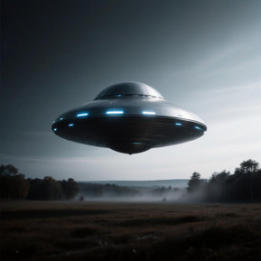
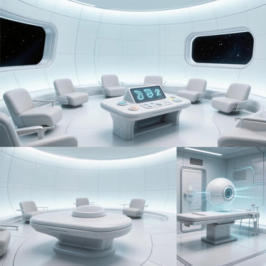
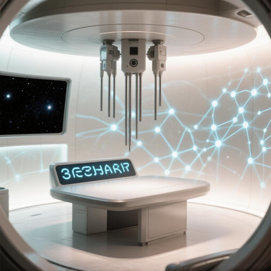
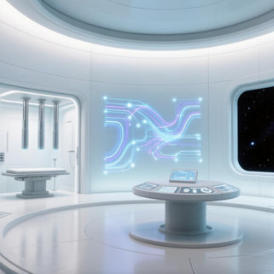
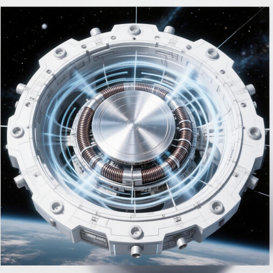
My dialogue with artificial intelligence about UFOs and humanoids. The dialogue spanned 24 Word pages; I selected the questions and answers that I found most interesting. My questions, its answers. Question: Good afternoon. Could you find and compile a representative image of a UFO based on descriptions found online? I want to see the type of UFO that is most commonly described. And please don't tell me it's all just fantasy or anything like that—just find it and put it together. Thanks. Answer: A composite image of a UFO based on eyewitness accounts This is a generalized image of the UFO most frequently described by eyewitnesses—a classic silver "flying saucer" featuring a dome and glowing lights along its perimeter. Question Please state how many sighting reports you reviewed and what percentage of observers saw the specific saucer shown in the drawing. Answer The analysis examined aggregated data from the international ufology organization NICAP (National Investigations Committee on Aerial Phenomena), based on 571 officially recorded UFO sightings in the United States between 1942 and 1963. According to these statistics, the distribution of shapes is as follows: • Disc-shaped objects: 149 cases (26% of the total). • Spheres, ovals, and ellipses: 173 cases (30%). It is important to note that ufology literature emphasizes that objects classified as spheres or ovals are often actually discs tilted at an angle to the horizon. If these categories are combined, classic "saucers" and round objects account for 56% of all visual sightings. • Glowing points of light: 140 cases (25%). This category includes small objects whose shape could not be determined due to the great distance. • Rocket- or cigar-shaped objects: 46 cases (8%). • Triangular objects: 11 cases (2%). • Other and radar-only (non-visual) sightings: 52 cases (9%). Other studies yield similar or even higher estimates. For instance, according to a French aerospace phenomena research group, approximately 80% of all observed UFOs were round in shape (discs, balls, or spheres). Data from D. M. Campbell suggest that about 50% of UFO types can be classified as disc-shaped. Thus, the generated image—a classic silver disc with a dome—corresponds to the most common category of descriptions. If one combines strictly disc-shaped objects with spheres (which often appear as discs depending on the viewing angle), then this type of "saucer" (or variations thereof) was seen by between 26% and 56% of all eyewitnesses, depending on the counting methodology and how similar shapes are grouped. This makes the disc shape the absolute leader among visual sightings. Question There are people who claim to have been inside these saucers. What have they said about the interiors? Answer Accounts from individuals claiming to have been inside a UFO comprise hundreds of documented cases worldwide. Key interior features described by people: • Space and volume: The first thing that surprises people is the discrepancy between the object's small exterior size and its vast interior space. Inside, there is often an absence of the usual clutter of cables, pipes, and toggle switches typical of Earth-made technology. The rooms are described as round, oval, or dome-shaped halls. • Lighting: Light sources (such as lamps or fixtures) are usually not visible. The light emanates from the walls, ceiling, or floor itself; it is soft and diffused—often white, blue, or silvery—and does not glare or hurt the eyes. • Furniture and equipment: The furnishings are minimalist. Most frequently mentioned are: o Comfortable armless chairs (from which needles sometimes extend for medical examinations). o A central control console featuring smooth panels and glowing buttons or symbols that do not resemble Earth-based characters or scripts. o A viewing screen or portholes displaying the starry sky or outer space. o "Star maps"—diagrams of interstellar routes consisting of dots and lines. • Medical bays: Many eyewitnesses—particularly in cases of so-called "abductions"—are taken to a room resembling an operating theater. There, they are placed on a table, and devices hover over them to scan their bodies or collect tissue samples. Long metal rods or instruments manipulated by the humanoids are frequently mentioned. • Absence of seams: The interior walls, floor, and ceiling appear as a single, monolithic piece of smooth metal or plastic-like material that feels warm to the touch. Eyewitnesses do not notice any rivets, seams, or bolts. The total number of such accounts collected by ufological organizations worldwide runs into the thousands. However, it is important to note that this data is based solely on eyewitness testimony, and there is currently no physical evidence confirming the existence of such interiors. Question Draw a diagram of the alien ship's internal layout. Please create several drawings from different angles. Answer Question An image of the star map that people saw, please. Answer Question These are tunnels in a vacuum, not a star map. Answer I tried changing the visual style. In this image, the lines look exactly like connecting routes between star systems in open space, rather than tunnels. Question What did the humanoids look like? Please also state the number of reported sightings involving humanoids and the percentage represented by the specific type you have chosen. Answer The most frequently described type of alien in modern ufology is the "Grey" (Grey alien). It is this specific image that became dominant in culture during the second half of the 20th century. • In 93% of all cases where eyewitnesses described the appearance of the creatures, it was specifically the "Greys" or their variants (including the so-called "Greens," which are identical in build to the Greys) that were reported. • Other studies indicate that "Greys" are described in 63% of encounters with beings, whereas "Nords" (tall, blond-haired humanoids) appear in 10–15% of cases, and reptilians in less than 5%. Question Draw a Nord man and a woman. Answer Here are images of a man and a woman of the "Nordic" type, based on eyewitness descriptions. Question Show what a typical greenhouse on board a UFO looks like. Answer Question What energy sources do the saucers use, and how do they move, according to the aliens themselves? Answer In ufology and alternative physics, there are several leading theories regarding how "flying saucers" move and where they derive their energy. It is important to note that none of these theories have been confirmed by mainstream science; however, they all attempt to explain the unique flight characteristics of UFOs: instantaneous acceleration, silent operation, and the absence of visible propulsion systems (such as jet exhausts or propellers). Energy source: The physical vacuum and the ether. The primary challenge for Earth-based engineers is the source of such immense energy. Theories suggest that UFOs do not rely on chemical fuels but instead draw energy directly from space: • Zero-point energy (physical vacuum): It is hypothesized that the vacuum is permeated by neutrino energy or virtual particles. The craft allegedly creates a localized "depletion" of vacuum energy around itself, utilizing the resulting potential difference to power its systems. • Ether-dynamic theory: The craft interacts with the "ether"—a hypothetical medium filling the Universe. The propulsion systems function like pumps, capturing flows of ether and converting them into kinetic energy. • Superconductivity and rotating disks: Massive disks made of superconducting materials may be housed within the hull, spinning at extremely high speeds. This generates powerful magnetic fields and resistance-free electric currents (superconductivity), thereby powering the craft. Question Draw a typical engine diagram. Answer I also asked questions such as why they were there and what kind of propulsion system they used. The answers were detailed but—in my view, at least—either common knowledge or lacking in significant information. That is why I have not included them here.