




Blog Shaoliv
About unusual things according to the author. About immortality. Ways to really fight old age. email: proxyda@hotmail.com
Creation Health & Immortality
| Address: planet Earth | Solar system| Milky Way galaxy | Virgo Cluster



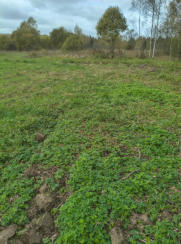
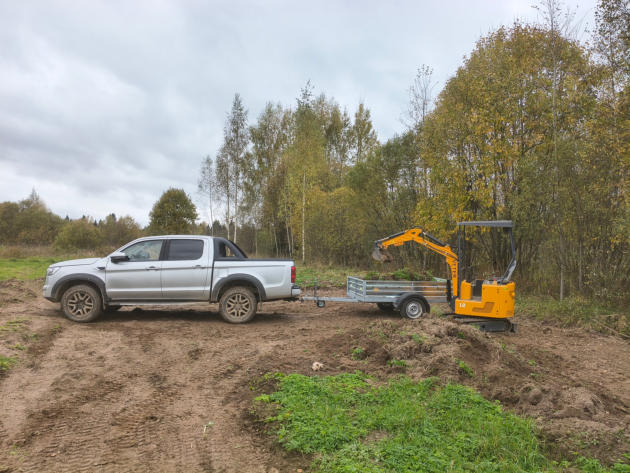
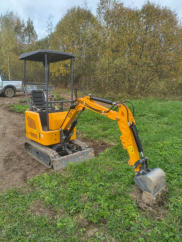
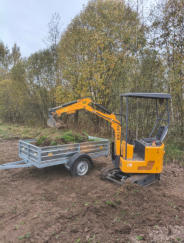
Technical Autonomy: Earthwork, Land Leveling, and Ground Preparation When implementing any practical or unusual technical project on your property—such as constructing a dedicated workshop, an off-grid laboratory, or a secure domestic garage—the physical foundation is everything. You cannot build a reliable technical structure on uneven or unstable soil. In this article, I want to share my personal experience and technical approach to preparing the ground, highlighting why a mini-excavator and subsequent subgrade layering (подсыпка) are absolutely essential. Step 1: Land Leveling with a Mini-Excavator The first and most critical phase of preparing the site for my garage project was clearing and leveling the uneven terrain. Doing this manually is nearly impossible, which is why a mini-excavator became the primary tool for the job. • Precision in Confined Spaces: Thanks to its compact size and high maneuverability, the mini-excavator allowed me to operate precisely around existing structures without damaging the surrounding landscape. • Soil Displacement: Using the excavator’s bucket, I was able to quickly remove the unstable topsoil (the organic layer), dig out deep tree roots, and cut down the high spots of the slope to match the desired baseline level. Step 2: Why the Mini-Excavator is Only Half the Battle Many amateur builders make a critical mistake: they assume that once the mini-excavator has leveled the ground, the surface is ready for concrete or construction. This is a misconception. Even after careful excavation, the remaining subgrade soil is disturbed, loose, and highly susceptible to shifting under heavy loads. If you pour concrete directly onto this excavated earth, the ground will eventually settle unevenly, leading to structural cracks in your garage floor or walls. Step 3: The Crucial Role of Subgrade Layering To fix this problem and create a perfectly stable, professional foundation, the next mandatory technical step is creating a structured backfill or subgrade layering (подсыпка). 1. The Sand Cushion: A layer of clean sand is spread over the excavated earth to fill the micro-voids left by the excavator's teeth and to act as a capillary break against underground moisture. 2. The Crushed Stone Layer (Crushed Aggregate): On top of the sand, a dense layer of gravel or crushed stone is added. This layer distributes the weight of the future garage structure evenly across the ground. 3. Compaction: Each layer must be thoroughly compacted using a vibrant plate compactor. This process locks the aggregate particles together, forming an unyielding, load-bearing platform that prevents any future shifting. Conclusion True engineering independence means understanding both the heavy mechanical phase and the detailed material science phase. Operating a mini-excavator to reshape the terrain is a powerful experience, but it is the meticulous process of subgrade layering that ensures your physical infrastructure will stand the test of time.

Home | Mini-excavator | Brain waves